Leads Going Cold? Why It Happens and How to Keep Them Warm
The first call went well. They said "send me something over". You did. Then nothing. A month later they bought from someone else.
Quick answer
Leads going cold: Leads go cold when follow-up stops, when they don't see a clear next step, or when nothing new gives them a reason to reply. Keep them warm with a set rhythm of useful contact, a specific next step in every message, and a short check-in sequence for people who say 'not yet'.
Key takeaways
- Most leads go cold because there is no clear next step or follow-up.
- One follow-up message is not enough; multiple touches are needed.
- Always end messages with a simple, clear next step.
- Add something new and valuable in every follow-up to encourage engagement.
- Treat ‘not now’ as a future appointment and follow up on that date.
- Respond faster than competitors to increase chances of winning the lead.
The first call went well. They said "send me something over". You did. Then nothing. A month later they bought from someone else.
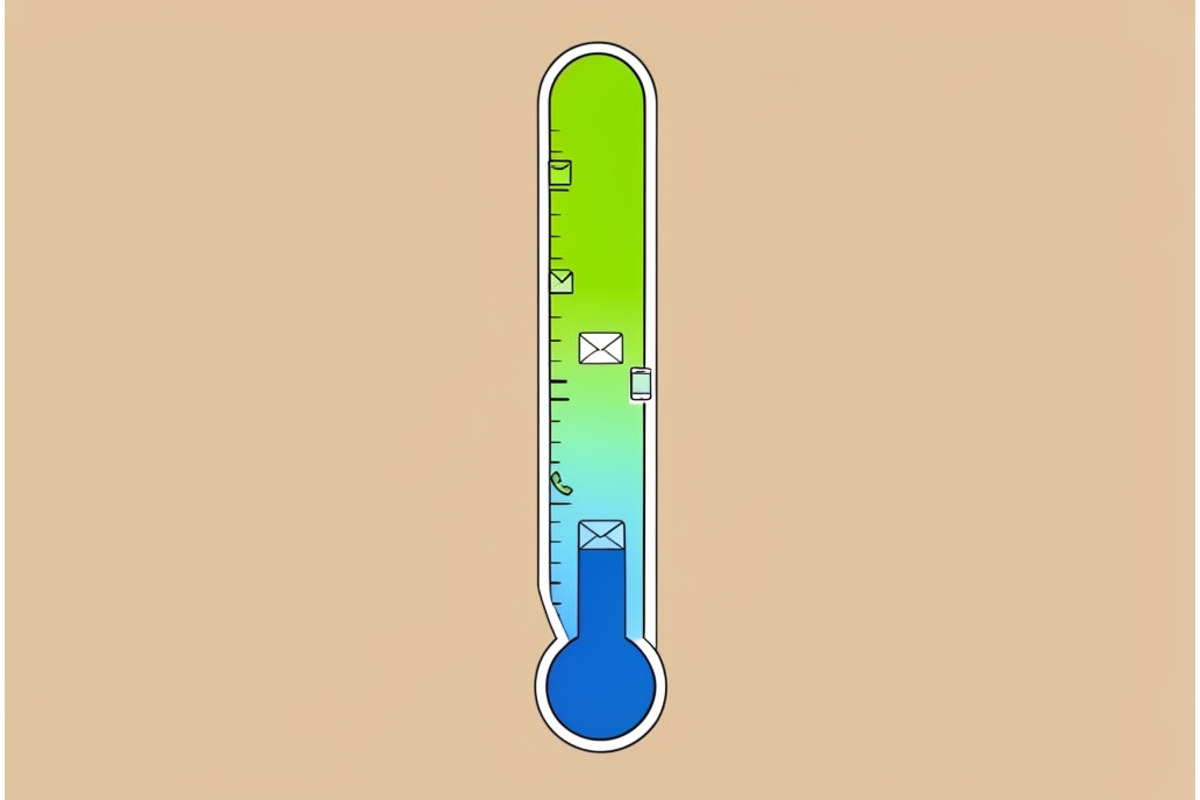
Leads rarely go cold because they lost interest. They go cold because the next step wasn't clear and nobody kept the conversation going.
The 6 reasons leads go cold
- You stopped after one follow-up. Most sales need several touches. One email after a call isn't a follow-up plan.
- There was no next step. "Let me know if you have questions" puts all the work on them.
- You sent too much. A 20-page brochure feels like homework.
- Nothing changed between messages. "Just checking in" gives no reason to reply.
- Someone else replied faster. In many markets, the first good reply wins.
- The timing wasn't right. They meant "later", and you heard "no".
How to keep leads warm
Always end with one next step
Every message should finish with one simple ask: "Shall I book Thursday at 10?" or "Want me to send the two options side by side?".

Use a follow-up rhythm
| Day | Message |
|---|---|
| 0 | Recap the call and the next step |
| 2 | Answer the question they're probably thinking |
| 5 | Share a short example or result |
| 10 | Offer a quick call to settle any doubts |
| 20 | Ask if timing has changed |
| Monthly | One useful note until they say stop |
Add something new each time
A case study, a price change, a slot that's opened up, a tip about their situation. Value earns replies.
Treat "not now" as a date
Ask "When would be a better time to pick this up?" and put it in the diary. Then follow up on that date with something relevant.
How the Sales Pack helps
The Sales Pack is 16 Claude Skills for the sales side: follow-up scripts, objection handling and pipeline reviews. Use it to write the whole rhythm above for your business in minutes, and to review your pipeline for deals that are cooling.
Related reading: How to Stop Your Cold Emails Going to Spam · How to Warm Up a New Email Domain for Cold Outreach
Questions and answers
How many times should I follow up with a lead?
Five to eight touches over a few weeks is normal for considered purchases, mixing email, phone and text, then monthly.
How do I re-engage a cold lead?
Lead with something new: a change, an offer or a short useful insight. Then ask one simple question.
When should I stop following up?
When they say no, ask you to stop, or after a clear "closing the loop" message gets no reply.